

OSRS Beginner Roadmap: How to Start Old School RuneScape (2025 Beginner Guide)
Old School RuneScape (OSRS) is one of the most unique MMORPGs ever created. It’s deep, rewarding, incredibly nostalgic, and notoriously unforgiving for beginners. Unlike many modern MMOs, OSRS doesn’t guide you with markers, quest pointers, or a linear path. You log in, finish Tutorial Island… and the world simply opens.
For many new players, this freedom can feel overwhelming.
This beginner’s roadmap gives you a clear, modern, step-by-step orientation for your first hours, first upgrades, first quests, early money, training path, and a safe progression plan. Whether you’re brand new, returning after many years, or trying OSRS because your friends play, this guide will give you the structure OSRS intentionally avoids giving you.
Is OSRS Beginner-Friendly? What New Players Should Know
OSRS can be beginner-friendly, but only if you understand a few foundational truths:
- OSRS does not hold your hand There are no quest markers, no recommended zones, and no automated skill paths. The game expects you to explore, learn, and make mistakes.
- Levels matter, but smart progression matters more A player with well-chosen quests and basic gear often outperforms someone who just grinded combat levels.
- Membership dramatically improves the early game Free-to-play (F2P) is fine to learn the basics, but progression, quests, bosses, skills, and money-making open up in Pay-to-Play (P2P).
- OSRS is a marathon, not a sprint Progress is slow by design. Enjoy the journey — don’t rush.
First Steps in OSRS: What to Do After Tutorial Island
After leaving Tutorial Island, you’ll land in Lumbridge — the unofficial “beginner capital” of OSRS.
Here’s what to do immediately.
1. Get Comfortable With the Interface and Controls
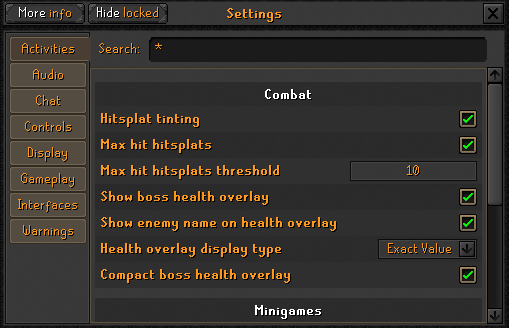
Before you do anything:
- Adjust your camera controls
- Turn on “Esc closes interface”
- Set hotkeys (F-keys)
- Enable the run energy indicator
OSRS doesn’t explain most of these. Mastering the interface early makes everything easier.
2. Choose a Starting Hub
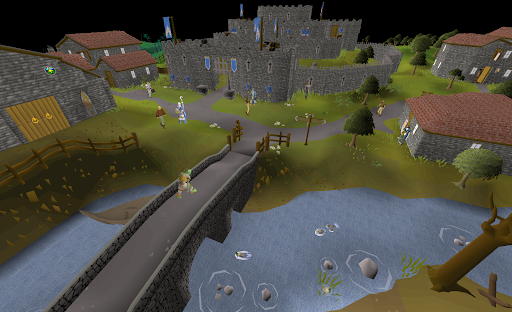
Pick a main area to operate from:
- Lumbridge – best early NPCs, shops, cows, goblins, fishing
- Varrock – Grand Exchange, training areas, shops
- Falador – early mining and smithing routes
- Al Kharid – early crafting, mining, and food shops
Most beginners stay near Lumbridge → Varrock, which is a great first path.
3. Unlock Early Teleports
Mobility is one of the biggest power spikes for early players.
Priority spellbook teleports:
- Home Teleport – no requirements, 30-minute cooldown
- Varrock Teleport – Magic level 25
- Falador Teleport – Magic level 37
- Camelot Teleport – Magic level 45
- Ardougne Teleport – Magic level 51
Even if you don’t focus on Magic, unlocking teleports makes everything faster.
Bonus: Grouping teleports
- Through the Grouping interface (minigames tab), you get free Grouping teleports every 20 minutes.
- These take you near various minigames and activities, and can double as early-game travel options even if you don’t plan to actually play the minigame.
4. Set Your Early Goals (Simple and Realistic)
A good early progression plan looks like this:
- Complete basic quests
- Make your first 100k GP
- Reach ~40 in core combat stats
- Unlock important transport systems
This roadmap covers all of these.
Best Early Game Quests for Fast Progression
Quests are by far the most efficient way to level quickly in OSRS. Many quests give huge XP rewards with low or no skill requirements.
Here are the best ones to unlock early on.
Quests That Unlock Transportation
- Plague City Unlocks: Ability to cast Ardougne Teleport (once you have 51 Magic). Why recommend: Ardougne is a huge hub (Kourend ship, Ardougne cloak teleports, nearby farming patches, etc.), so unlocking the spell early is of great value even if you can’t cast it right away.
- Tree Gnome Village Unlocks: First Spirit tree teleport (Gnome Stronghold ↔ Tree Gnome Village). Why recommend: Spirit trees are a free, reusable transport network that later connects to more locations as you progress.
- The Grand Tree Unlocks:
- More Spirit tree options
- The Gnome glider network (fast flights to several points around the map)
Why recommend: Pairs perfectly with Tree Gnome Village and massively improves early–mid game travel.
- Ghosts Ahoy Unlocks: Ectophial — infinite teleports to the Ectofuntus near Port Phasmatys. Why recommend: One-click teleport with no charges; great for farming runs, early Morytania content, and banking.
- Priest in Peril (not a teleport, but important) Unlocks: Access to Morytania (Canifis, Slayer Tower, later Barrows/fairy ring routes). Why recommend: Opens an entire region and sets you up for Ghosts Ahoy and a lot of future transport/value.
Quests That Give Huge Level Boosts Early
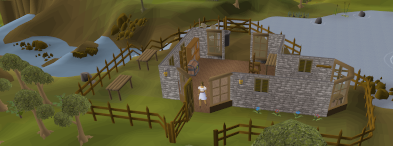
- Waterfall Quest Arguably the best early-game quest. Reward: big Attack & Strength XP (jumping you into the 30+ range). No combat required if you play carefully.
- Vampire Slayer Easy early combat XP and a fun mini-boss.
- Witch’s House Gives a big Hitpoints XP reward — extremely valuable early.
- Fight Arena Good Attack XP and easy to complete.
- Priest in Peril Unlocks Morytania, Slayer Tower, and the Barrows region, while giving Prayer XP.
Quests That Unlock Profitable Content
- Lost City Unlocks Dragon weapons (dagger, longsword).
- Animal Magnetism Unlocks Ava’s devices — essential for efficient ranged training.
- Dwarf Cannon (Dwarf Cannon quest) Unlocks the Dwarf multicannon — very strong for early ranged leveling if you can afford it.
- Recipe for Disaster (partial completion) Unlocks progressively stronger gloves from the Culinaromancer’s chest — great early gear and a long-term goal (Barrows gloves).
Beginner Money-Making Methods (Fast + Low Requirements)
You don’t need high stats to make your first money in OSRS. Here are the easiest, most consistent beginner methods.
Level 1–20 Early GP Methods
Cowhides in Lumbridge
Kill cows
Loot cowhides
Sell at the Grand Exchange
Easy, low risk, decent starter income.
Stronghold of Security (one-time)
Run all 4 floors in Barbarian Village
Follow the path, answer security questions
Claim the 10,000 coins + boots Huge one-time GP injection for a fresh account.
Early Fishing → selling raw fish
Net fish in Lumbridge, then move to Barbarian Village
Catch trout/salmon with fly fishing
Sell raw fish instead of cooking
Easy to learn, scales as your Fishing level rises.
Level 20–40 Beginner GP Methods
Mining iron ore
Mine iron rocks (e.g., Al Kharid, Varrock, Rimmington)
Bank or note and sell ore at the Grand Exchange
Fast XP and consistent, no-nonsense profit.
Woodcutting oaks & willows
Chop oaks near banks (Varrock, Draynor)
Sell oak logs for profit
Use willows for fast XP, not profit
Oaks = decent GP, willows = fast XP to unlock better trees.
Thieving men/women → cake stalls (Ardougne)
Pickpocket men/women for coins to get early Thieving levels
Move to cake stalls in Ardougne once unlocked
Sell the cakes that You steal at Grand Exchange
Great mix of GP + Thieving XP.
Early Slayer tasks
Get a Slayer task from a low-level master such as Turael
Kill assigned monsters, loot all valuable drops
Bank useful resources (runes, herbs, seeds)
Steady money, teaches combat and monster variety.
Level 40+ Money Methods
Cutting yews (F2P/P2P)
Train Woodcutting to 60+
Chop yews near a bank (Varrock, Edgeville, Seers’)
Bank and sell yew logs
Slow XP but classic, reliable moneymaker.
Making planks Buy regular/oak logs
Use sawmill (or Player-Owned House methods later) to make planks
Sell planks at the Grand Exchange
Beginner Combat Training Roadmap (0–60 Stats)
Combat progression is extremely important, and doing it efficiently saves hours.
Melee Training (0–60)
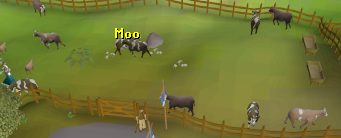
Levels 1–10: Chickens, cows, goblins
Levels 10–20: Al Kharid warriors
Levels 20–40: Sand crabs
Levels 40–60:Gemstone crab
Slayer is recommended as soon as you’re comfortable — it trains combat while giving loot and variety.
Ranged Training (0–60)
Levels 1–20: Chickens, cows, goblins
Levels 20–40: Al Kharid warriors, Sand crabs
Levels 40–60: Gemstone crab, Early Slayer tasks
Unlock Ava’s device (Animal Magnetism quest) as soon as you can for ammo recycling and faster XP.
Magic Training (0–60)
Levels 1–19: Wind Strike on cows and goblins
Levels 20–35: Fire Strike on hill giants
Optional profit: tele-grab Wines of Zamorak at 33 Magic (high profit but dangerous and competitive).
Levels 35–60: Gemstone crab, Early Slayer tasks
Magic shines early because of teleports and safespotting.
Beginner Skilling Roadmap (Fastest Early Progress)
Skilling has its own progression. Beginners should focus on a small number of skills first.
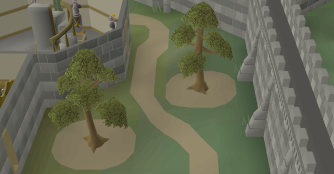
Woodcutting
Woodcutting 1–15: Trees
15–30: Oaks
30–60: Willows (fast XP)
Great AFK skill for beginners and pairs well with Firemaking.
Fishing & Cooking
Fishing 1–20: Shrimp
20–40: Trout & salmon
40–60: Lobsters, tuna, swordfish
Cook the fish you catch and sell them at the Grand Exchange for profit.
Fishing is relaxed, consistent money and food. Cooking levels up naturally alongside it.
Mining & Smithing
Mining 1–15: Copper & tin
15–30: Iron ore (best early XP + money)
30–60: Motherlode Mine (good XP + money)
Smithing can be trained as a side benefit from the ore you gather, or boosted via quests like The Knight’s Sword and Elemental Workshop I.
Crafting, Fletching, Firemaking
These are easy to level early on with cheap materials.
- Crafting: leather items → jewelry
- Fletching: arrow shafts → shortbows/longbows (u)
- Firemaking: burn the logs you chop during Woodcutting
They’re not mandatory to rush, but they are cheap and straightforward to train.
Hunter (P2P)
Hunter 1–9: Crimson swifts (Feldip Hills)
9–29: Bird snares (copper longtails, tropical wagtails)
29–43: Swamp lizards (Morytania)
43–60: Falconry (spotted/dashing kebbits) or salamanders
Catch everything you hunt and sell valuable furs, hides, and lizard drops at the Grand Exchange for steady profit while training.
Beginner Gear Upgrades (What to Buy First)
You don’t need expensive gear early. The goal is efficiency, not flex.
Melee Gear Path
Bronze → Iron → Steel → Black → Mithril → Adamant → Rune → Dragon
Key items:
- Amulet of strength (or other basic amulet)
- Leather boots / climbing boots
- Iron/steel/black armor sets
- Rune scimitar (huge early power spike)
Ranged Gear Path
Leather → Studded → Snakeskin → Green d’hide
Standard bows → Oak bows → Willow bows → Maple bows → Magic bows
Key items:
- Maple shortbow (low requirements, strong for its level)
- Bronze/iron/steel arrows or better as you can afford
- Ava’s device once unlocked (for ammo recovery and DPS)
Magic Gear Path
Basic robes:
- Wizard robes
- Elemental staves
- Amulet of magic
- Mystic gear when you can wear it
Magic gear is relatively cheap and adds a lot of accuracy and damage to your spells.
Your First 10 Hours in OSRS – Quick Roadmap
Here’s an optimized, realistic breakdown.
Hour 1: Explore Lumbridge
Train combat on cows
Train Fishing + Cooking
Get comfortable with the interface and camera
Hour 2: Complete Waterfall Quest
Travel to the Gnome Stronghold
Complete Waterfall Quest
Receive huge early Attack/Strength XP
Hours 3–4: Train combat + earn starter money
Cows → hides
Mining iron
Fishing and selling raw fish
Hour 5: Start unlocking transportation via quests
Tree Gnome Village
The Grand Tree
Hour 6: Start beginner Slayer tasks
Get your first Slayer task
Learn gear, food, safespotting, and basic combat mechanics
Hours 7–8: Skilling rotation
Woodcutting
Fishing
Cooking
Crafting
Firemaking
Hour 9: Do Animal Magnetism prerequisites
Work toward unlocking Ava’s device — huge ranged efficiency upgrade.
Hour 10: Start the Recipe for Disaster storyline
Begin the early subquests Unlock progressively stronger gloves in the game
From here, OSRS becomes your personal journey.
OSRS Beginner FAQ
What should beginners do first in OSRS?
Complete Waterfall Quest, train basic combat, and do early-game quests that unlock transportation.
How do you progress fast in OSRS as a new player?
Combine key quests with efficient combat and skilling paths. Focus on progression unlocks (teleports, gear, access), not pure grinding.
What quests should beginners do?
Waterfall Quest, Vampire Slayer, Tree Gnome Village, The Grand Tree, Priest in Peril, Fight Arena, Witch’s House, plus early parts of Recipe for Disaster and Animal Magnetism.
Is OSRS beginner-friendly?
Yes, if you follow a clear roadmap. The game provides freedom, but beginners benefit from structured progression.
What skills should beginners train first?
Fishing, Cooking, Woodcutting, Mining, Magic (for teleports), and early Slayer.
How do beginners make money in OSRS?
Cowhides, mining iron, woodcutting oaks/yews, thieving stalls, Wines of Zamorak (with telegrab), and early Slayer tasks.
Final Thoughts
OSRS is a deep and rewarding game, but the early hours define the pace of your long-term journey. With smart questing, efficient skill choices, structured combat training, and clear goals, new players can progress far faster than they expect.
This beginner’s roadmap gives you everything you need to start strong, avoid common mistakes, and set up your account for long-term success — whether you plan to become a PvM beast, a bossing main, a skiller, or a casual adventurer.